
The British Crown Green Bowling Association

The precise origins of bowls are difficult to pinpoint, but archaeological evidence suggests that games involving rolling stones or balls toward a target were played thousands of years ago. Excavations in ancient Egypt uncovered stone objects in tombs dating back to around 3200 BC that resemble early bowls or jack stones.
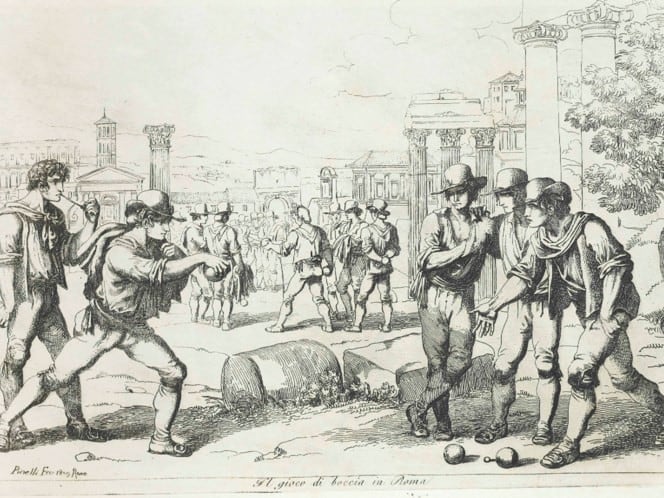
Similar games appear to have existed in ancient Greece and Rome. Greek writings refer to games of skill involving throwing or rolling objects, while Roman soldiers are believed to have played ball games that required accuracy and control. One Roman pastime, bocce, which survives today in Italy, shares clear conceptual similarities.
These early games were not bowls in the modern sense, but they established the core principle that defines the sport: delivering an object along the ground with the aim of stopping it as close as possible to a target. That simple idea would prove remarkably durable.
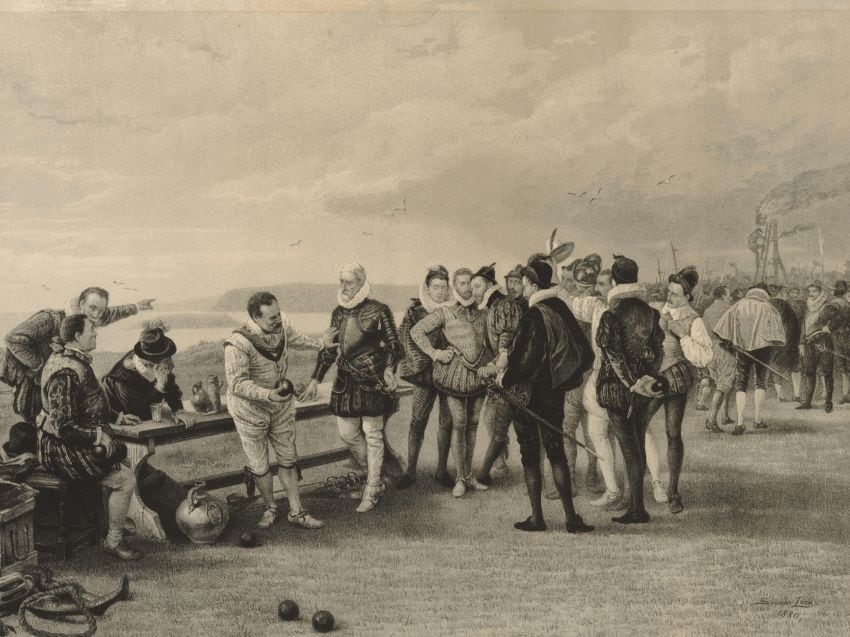
The clearest lineage of modern bowls can be traced to medieval England. Written references to a game resembling bowls appear as early as the 12th century. One of the earliest known mentions is found in a 1190 document describing a game called jactus lapidum (throwing of stones), which many historians believe refers to an early form of bowls.
By the 13th and 14th centuries, bowls had become popular among the English population, particularly in southern England. The game was often played on uneven outdoor ground, village greens, or open fields. Early bowls were typically made of wood or stone and were far less uniform than modern equipment.
The growing popularity of bowls among common people soon attracted the attention of authorities. Like archery, bowls competed for the leisure time of working men, and archery was considered essential for national defence. As a result, several English monarchs attempted to restrict or ban bowls.
King Edward III banned bowls in 1361, fearing it distracted men from archery practice. Similar bans were imposed by Richard II and Henry IV. The most famous restriction came during the reign of Henry VIII, whose 1511 statute prohibited bowls for all but the wealthy. Only landowners of a certain income were allowed to play, and even they were restricted to private greens.
Ironically, Henry VIII himself was an enthusiastic bowler and is believed to have owned a personal bowling green at Whitehall Palace. This contradiction highlights a recurring theme in the sport’s history: bowls as both a pastime of the elite and a popular game of the people.